Here are a few ideal locations that have the characteristics of an LCI 15 Minute Community (small retail, Metro stop, low car street) and could be transformed almost immediately:
Third Street Promenade
It’s already appealing to live in Santa Monica without a car – 25% of residents already do (twice the rate of LA). Santa Monica has a growing network of Bike Lanes, bus service, walkability, and lots of small retail. It also has a relaxed, SoCal vibe which is perfect for a bikeable life. It’s not hard to imagine neighborhoods in Santa Monica opting to become slow streets with cars going under 9mph, and residents using golf carts and NEVs.
The best place in LA for an LCI is probably Third Street Promenade – because it is already pedestrianized. On the 1200 block, retail is struggling with a 50% vacancy rate – and housing would create built-in customers. It is a perfect location – one block from the Expo Line, and a few blocks from arguably LA’s greatest public park and shared amenity – the beach.
The demand for housing in Santa Monica is enormous: an estimated 100,000 people commute into Santa Monica for work – which snarls the city with traffic. Every street on the Westside of LA is over capacity during peak hours – there is nothing left to do (widen streets has the opposite effect) but create mobility alternatives. Building small units without parking above stores would create more opportunities for attainable homeownership and affordable rents in one of the most sought-after neighborhoods in the country.
Westwood
Westwood Boulevard and Westwood Village are an ideal location for an LCI. Westwood Blvd is a 1.5 mile street that dead-ends at both ends, and traffic can easily move 7 blocks away to the 405 freeway.
The Village is a 360’ village and a Legacy Neighborhood with fine grain retail, walkability and beautiful historic architecture. There is community support for increasing density in a way that is in keeping with the historic vernacular. Stakeholders have come together and are in the initial stages of creating the Westwood Village Historic Preservation Infill Plan: a plan to allow targeted infill development using Objective Design Standards and Standard Plans that lower costs and speed up the process.
The business improvement district (the Westwood Village Improvement Association – WVIA) has supported street improvements to the Village. Westwood is a major job center between the university, the medical center, retail and the commercial buildings. 63,000 workers commute in by car and 20% of UCLA students commute in.
Hollywood Blvd
Hollywood Blvd is another ideal location for a 15 minute community. There is already a plan to transform the street to a low car street – and possibly pedestrianize the street. It is one of the densest parts of LA (and the country) with thousands of renters, along with struggling retail that would benefit from more residents living right upstairs. Hollywood is nestled at the base of the Hollywood Hills and is already a low-traffic street that dead ends at both ends. The city closes the street all the time for movie openings and the Farmer’s Market – and traffic moves seamlessly to surrounding streets.
Hollywood Blvd is also the location of one of the most ambitious ideas out there: Hollywood Central Park – a plan to cap the 101 freeway and create a park the size of Central Park above it. Here is a deck of imaginings.
There are locations all over LA County that could easily work, including:
- Market Street in Inglewood – a vibrant street with tons of shops and a K-Line Metro stop. There are plans for a People Mover to the SoFi Stadium – which could create a vibrant destination for fans to come before and after games.
- Abbot Kinney/Main St and Montana Ave. – there is almost unlimited demand to live near the beach, especially in SoCal. A 15 Minute Model can create opportunities for people to live compact, low cost, Zero Carbon lives in high-opportunity, job-rich, amenity-rich neighborhoods. Small, dignified apartments can create a great downsizing option for Seniors, aging parents, adult children who grew up in the neighborhood and want an affordable option to stay close to their parents.
- Washington Blvd and Culver Blvd –- Culver City is a major job center and film and tech hub (Amazon, HBO, Sony, Google nearby) and has a vibrant, walkable urban core. There is easy access to the Expo Line, and the city is implementing a growing bike lane network.
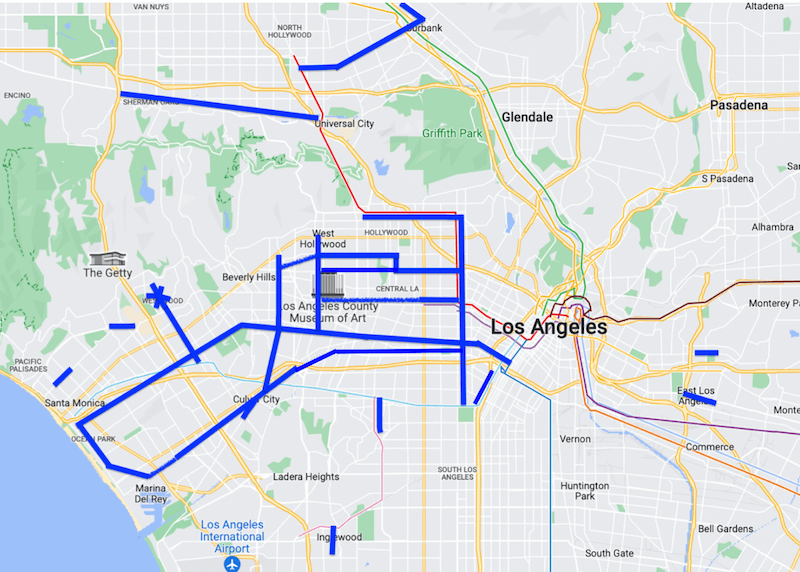
This chart analyzes streets that have a high chance of working based on conversations and research with mobility experts, urbanists, guidance from elected officials, and have the following characteristics: Existing fine grain retail (and narrow parcels); touches Metro; adjacent to a major job center; the street has a narrow width, dead ends and/or carries a Low Traffic Volume’ has existing local support; increases equity; and can be enacted Through City Council by Ordinance without years of delays:
| Potential LCI Streets | Fine grain retail | Touches Metro | Job Center | Narrow width | Dead End/Low Traffic Volume | Local Support | Increases Equity | Enacted Through City Council Ordinance? |
| Westwood | Yes | Yes | Yes | Yes | Yes | Yes | Yes – Equitable Distribution of Affordable Housing | Yes |
| Beverly Blvd | Yes | Yes | Yes | Yes | Yes | Yes | Yes – Equitable Distribution of Affordable Housing | Yes |
| Hollywood | Yes | Yes | Yes | Yes | Yes | Yes | Yes – Equitable Distribution of Affordable Housing | Yes |
| Vermont | Yes | Yes | Yes | Yes | Yes | Yes | Yes-Brings Amenities to Low Income Communities and/or Communities of Color | Yes |
| Abbot Kinney/Main St | Yes | Yes | Yes | Yes | Yes | Yes | Yes – Equitable Distribution of Affordable Housing | Yes |
| Crenshaw/Leimert Park | Yes | Yes | Yes | Yes | Yes | Yes | Yes-Brings Amenities to Low Income Communities and/or Communities of Color | Yes |
| Ventura Blvd | Yes | Yes | Yes | Yes | Yes | Yes | Yes – Equitable Distribution of Affordable Housing | Yes |
| NoHo Arts Center-Lankershim-Magnolia | Yes | Yes | Yes | Yes | Yes | Yes | Yes – Equitable Distribution of Affordable Housing | Yes |
| Westwood Village | Yes | Yes | Yes | Yes | Yes | Yes | Yes – Equitable Distribution of Affordable Housing | No: Specific Plan, 1.5 years to amend |
| 6th Street | Yes | Yes | Yes | Yes | Yes | Yes | Yes – Equitable Distribution of Affordable Housing | Yes |
| West Adams Blvd | Yes | Yes | Yes | Yes | Yes | Yes | Yes-Brings Amenities to Low Income Communities and/or Communities of Color | Yes |
| Upper Larchmont | Yes | Yes | Yes | Yes | Yes | Yes | Yes – Equitable Distribution of Affordable Housing | Yes |
| Melrose | Yes | Yes | Yes | Yes | Yes | Yes | Yes – Equitable Distribution of Affordable Housing | Yes |
| Fairfax | Yes | Yes | Yes | Yes | Yes | Yes | Yes – Equitable Distribution of Affordable Housing | Yes |
All of the blue lines on this map could work (please note – this is just an overview of possibilities, not a definitive recommendation):